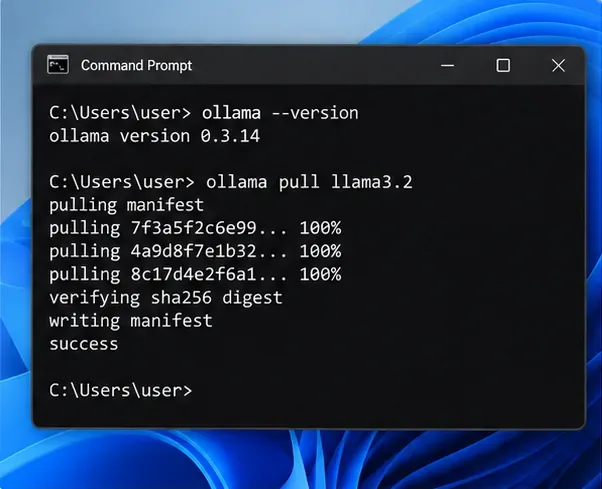
如何使用 Local Ollama 自動產生 SEO 元標題和描述
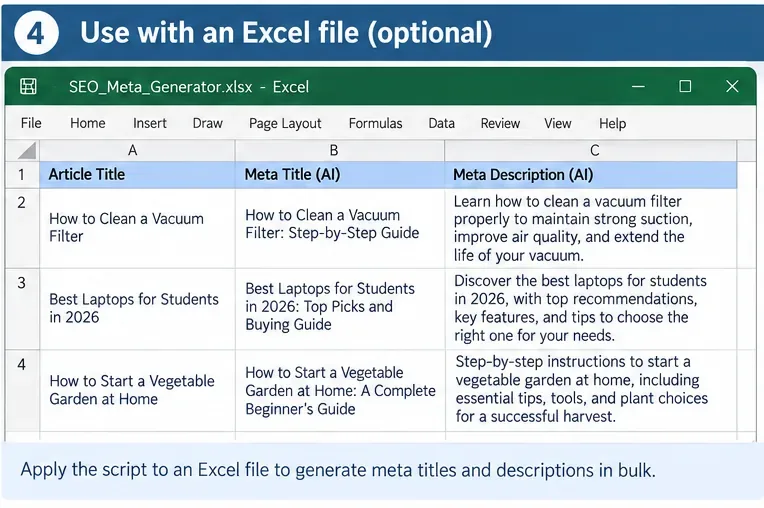
建立本地 Ollama 工作流程,批量產生結構化的 SEO 標題和元描述,驗證輸出,並將結果標記出來以供手動審核。
The most useful recent official update for people planning long work-from-home days is not a new productivity fad. On July 16, 2026, the U.S. National Institute for Occupational Safety and Health (NIOSH) updated its office-environment guidance and again highlighted that short breaks during computer work can help reduce discomfort. That matters for time blocking: a good schedule should not pack every minute. It should deliberately reserve room for breaks, transitions, and unexpected work. See the current NIOSH office-environment guidance.
Digital calendars reinforce the same basic idea of protecting time. Google Calendar currently supports Focus time events on eligible work or school accounts, including options to mute Chat notifications and automatically decline meetings. Microsoft Viva Insights also includes features for protecting focus time for users with the applicable subscription. Those tools are useful, but a printable daily time blocking template still has an advantage for WFH professionals: it gives you a simple planning surface that is independent of a specific employer, calendar platform, or notification system.
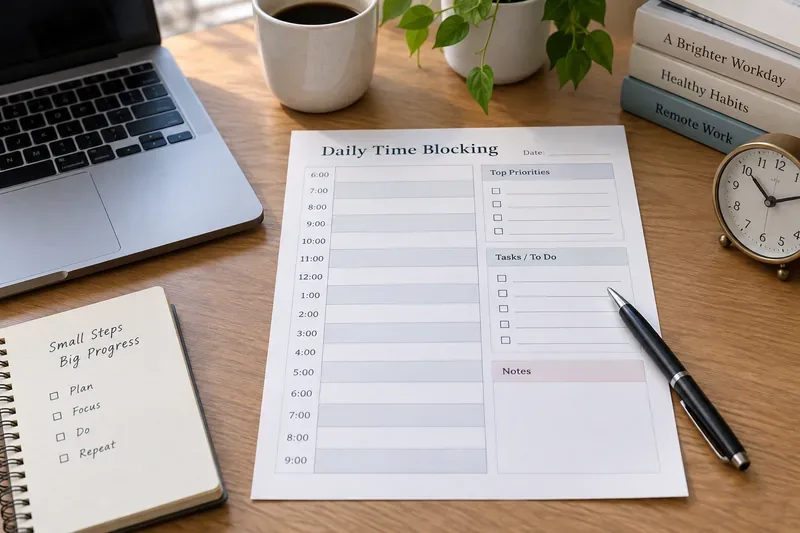
Time blocking means assigning a specific part of the day to a type of work, task, meeting, break, or routine. Instead of keeping a long to-do list and deciding what to do every few minutes, you decide in advance what each block is for.
The goal is not to follow the sheet perfectly. The goal is to make tradeoffs visible. If your calendar already contains four hours of meetings, the template should show that you do not also have six uninterrupted hours for project work. If a task takes longer than expected, the blank buffer on the page tells you where that work can go without automatically pushing the entire evening later.
This matters in remote work because home-based days can mix scheduled calls, asynchronous messages, individual work, household interruptions, and blurred start-and-stop boundaries. NIOSH's earlier work-from-home guidance recommends keeping a routine, creating focus times, setting boundaries between work and home, and taking frequent breaks. You can review the original NIOSH working-from-home guidance.
The layout below is designed to fit the way many WFH professionals actually work: fixed commitments first, then focus work, communication windows, breaks, buffer, and a defined shutdown. Print the page directly, or use your browser's Print command and choose a PDF-saving option when your operating system or browser provides one. Exact print-menu wording varies by platform.
| Field | Write this before the day begins |
|---|---|
| Date | ____________________________ |
| Work window | Start ________ End ________ |
| Top outcome 1 | ____________________________________________ |
| Top outcome 2 | ____________________________________________ |
| Top outcome 3 | ____________________________________________ |
| Availability boundary | Examples: lunch, school pickup, appointment, no-meeting window |
| Must-answer communication window | ____________________________________________ |
| Time | Block or task | Type | Notes / moved to |
|---|---|---|---|
| 7:00–8:00 | |||
| 8:00–9:00 | |||
| 9:00–10:00 | |||
| 10:00–11:00 | |||
| 11:00–12:00 | |||
| 12:00–1:00 | |||
| 1:00–2:00 | |||
| 2:00–3:00 | |||
| 3:00–4:00 | |||
| 4:00–5:00 | |||
| 5:00–6:00 | |||
| 6:00–7:00 |
If you need 30-minute precision, divide each row in half by hand. If your day starts earlier or later, relabel the rows. The point is to keep the format simple enough that you will actually use it.
Start with meetings, appointments, deadlines that require attendance, and any personal boundary that makes you unavailable. A paper plan should never pretend that those hours are free. If your employer uses a shared calendar, the digital calendar should remain the source of truth for other people's access to your time.
An outcome is more useful than a vague activity. “Draft the client proposal through the pricing section” is easier to schedule than “work on proposal.” “Review and respond to the five open hiring decisions” is clearer than “email.” The top-three area forces a daily priority decision before the day becomes reactive.
Place demanding work in the part of the day when you can realistically protect it. As a starting experiment, try a 45- to 90-minute focus block, then adjust based on the work and your role. There is no universal ideal block length. A support engineer who may be interrupted frequently needs a different plan from a writer, analyst, designer, or researcher.
關於幹擾的研究有助於解釋為什麼這很重要。在格洛麗亞·馬克、丹妮拉·古迪思和烏爾里希·克洛克的一項實驗研究中,人們透過加快工作速度來彌補幹擾,但卻報告了更多的壓力、挫折感、時間壓力和工作量。這項研究並沒有證明每項工作中的每一次幹擾都是有害的,但它支持一個合理的調度原則:當工作需要持續注意力時,應減少不必要的任務切換。閱讀加州大學歐文分校的原始論文。
電子郵件、聊天和團隊訊息通常會源源不斷地湧來,但這並不意味著每條訊息都需要立即回覆。如果你的工作允許,可以創建一個或多個溝通窗口,並在日程表中保持可見。例如,你可以在上午的專注工作時間結束後、午餐後以及下班前查看訊息。如果你的工作對回覆時間有要求,請將該要求納入日程安排,而不是照搬其他人的流程。
不要把休息時間當作剩餘空間。美國國家職業安全與健康研究所 (NIOSH) 目前的辦公室指南指出,每小時短暫休息可以減輕電腦工作者的不適感,其居家辦公指南也建議定期休息並變換姿勢。因此,時間安排表應該包含恢復時間,而不僅僅是工作時間。
你不必把每次休息都變成嚴格的計時器。一個比較實際的做法是,在主要工作時段之間安排短暫的螢幕休息和姿勢調整,再加上較長的用餐時間。如果你的工作需要長時間的視訊會議,會後留出幾分鐘時間做筆記、喝水、活動一下,或者只是簡單地切換一下工作內容。
日程安排滿滿看似高效,實則脆弱。如果每個小時都安排滿了,那麼一個臨時會議或緊急請求就會導致當天剩餘時間的安排被打亂。作為參考,建議每天預留大約 10% 到 20% 的工作時間。這個比例並非絕對標準,而是一個可以根據實際情況進行調整的規劃緩衝。對於需要高度反應的職位,可能需要預留更多時間。
遠距辦公可能會讓一天的結束變得模糊不清,因為下班後筆記型電腦仍然放在身邊。設定一個「關機」環節可以清楚地結束一天的工作:記錄未完成的任務,更新日曆,準備明天的第一個任務,然後停止工作。如果流程簡單,即使只有 10 到 15 分鐘也足夠了。
假設你的工作時間是上午 8:30 到下午 5:30,上午 10:00 有團隊會議,下午 2:00 有客戶電話,明天要交一份提案。一個可行的計劃可能如下所示:
| 時間 | 堵塞 | 原因 |
|---|---|---|
| 8:30–9:45 | 提案重點模組 | 會議前最重要的專注工作 |
| 9:45–10:00 | 休息和會議準備 | 過渡階段,而不是將重點工作帶入通話中 |
| 10:00–10:45 | 團隊會議 | 固定承諾 |
| 10:45–11:15 | 訊息和後續跟進 | 大量通訊 |
| 11:15–12:15 | 提案重點模組 | 第二保護工作期間 |
| 12:15–1:00 | 午餐時間不在辦公桌外。 | 更長的休息時間 |
| 1:00–1:45 | 行政和準備工作 | 客戶拜訪前進行強度較低的工作 |
| 1:45–2:00 | 客戶電話準備 | 過渡緩衝區 |
| 2:00–3:00 | 客戶來電 | 固定承諾 |
| 3:00–4:00 | 緩衝/緊急工作/後續工作 | 能夠巧妙地化解驚喜,而不會破壞夜晚的氣氛。 |
| 4:00–5:10 | 提案完成或審核 | 最後一段實質工作內容 |
| 5:10–5:30 | 關閉 | 記錄後續步驟並結束一天的工作。 |
這個範例刻意沒有使用 100% 的緩衝區容量。如果客戶端呼叫時間過長,緩衝區可以吸收一部分影響。如果沒有緊急情況發生,緩衝區中的空閒時間就可以轉換為有用的自由支配時間,而不是被浪費掉的時間。
對許多居家辦公人士來說,最佳方案是混合辦公。可以使用可列印的工作優先順序表格來安排個人工作,並使用共用行事曆來管理空閒時間、會議和組織範圍內的日程安排規則。
谷歌目前的文件顯示,專注時間功能可以靜音 Google Chat 通知,並自動拒絕符合資格的 Workspace 帳戶的會議邀請。微軟在 Viva Insights 中也提供了時間管理功能,可以為訂閱用戶保護日曆上的時間。當同事需要知道您暫時無法聯繫時,這些功能非常有用。列印出來的頁面本身無法拒絕會議邀請或使聊天應用程式靜音。
如果您使用 Google Workspace,請參閱Google 日曆專注時間官方文件。如果您的組織使用 Microsoft 365,請參閱 Microsoft 最新的Viva Insights 時間管理文件。文件更新於 2026 年 9 月 13 日;帳戶資格和訂閱要求可能會有所變更。
評判模板是否有效,應以工作日的整體品質為標準,而不是以每個步驟是否完全按照計劃完成為標準。一週後,觀察以下幾個具體指標:
如果日程表總是在中午前出錯,那就改變方法,而不是強迫自己執行一個糟糕的計劃。縮短行程時間,增加緩衝時間,只規劃接下來的半天,或如果會議變動太快,紙本日曆無法應對,那就改用電子日曆。
可列印的日程表有其限制。它無法自動與同事同步,無法在聊天工具中保護您的狀態,無法提醒您是否有重複預訂,也無法在會議變更時重新計算。此外,對於那些優先順序會根據突發事件、佇列、客戶或即時營運情況而隨時調整的工作來說,它也不太適用。
在這些角色中,應將頁面用作輕量級的優先順序和備註層,而不是精確的時間表。例如,僅屏蔽真正需要保護的少數時段,然後使用更廣泛的類別,例如「支援佇列」、「事件回應」、「管理」和「交接」。
每日時間區塊模板的作用在於讓一天的時間安排更加合理,而不是更擁擠。最好的版本能夠幫助你清楚地看到時間的有限性,確保你專注於真正需要關注的工作,並在計劃的工作日結束時及時停止。
建立本地 Ollama 工作流程,批量產生結構化的 SEO 標題和元描述,驗證輸出,並將結果標記出來以供手動審核。
Use this free modern real estate listing presentation PowerPoint blueprint to organize pricing, marketing, property prep, agent value, and seller next steps.
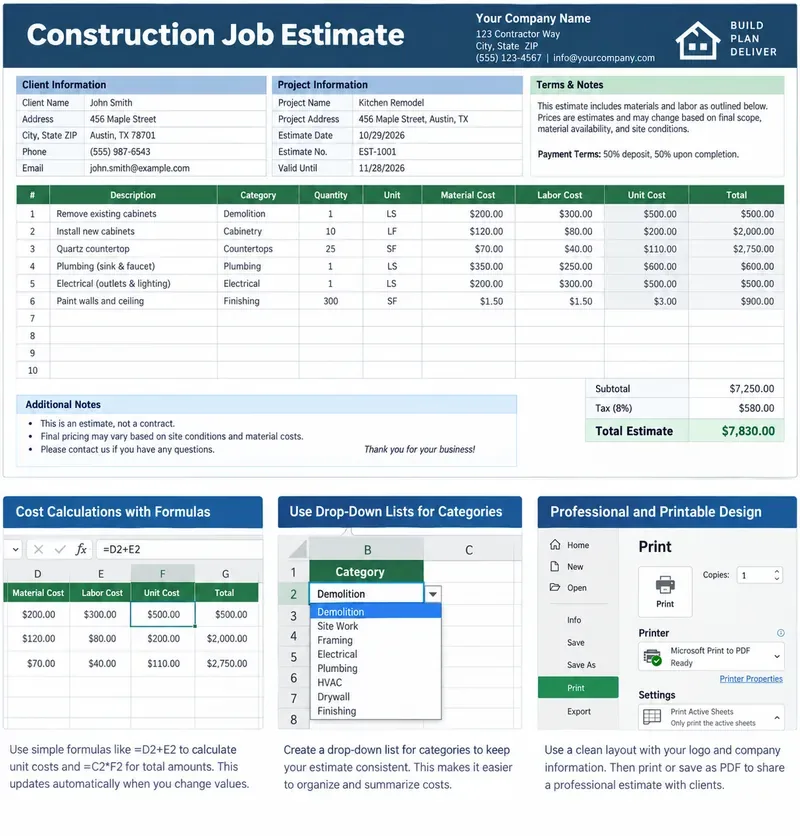
在 Excel 中建立一個可列印的建築工程估價模板,其中包含清晰的人工、材料、公式、加價、排除項和可直接列印的客戶總計。
利用實用的電影級照明公式、可重複使用的配方、範例和快速故障排除清單,建立更強大的 Luma Dream Machine 視訊提示。
Build a minimalist tech startup investor pitch deck in PowerPoint with the right slide order, clear design rules, traction metrics, and investor-ready appendix.
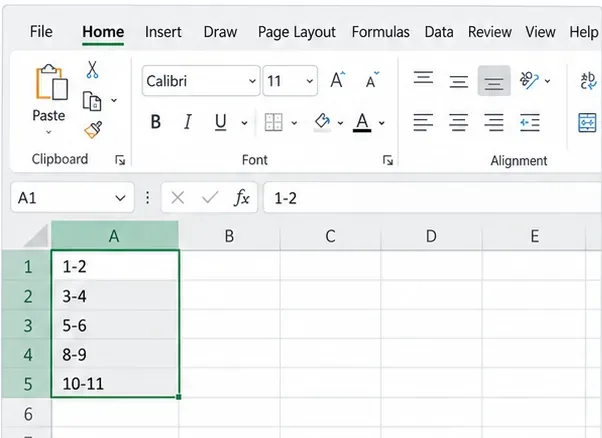
阻止 Excel 將程式碼、ID 和分數轉換為日期。使用文字格式、撇號、匯入控制項和最新的 Microsoft 365 選項。
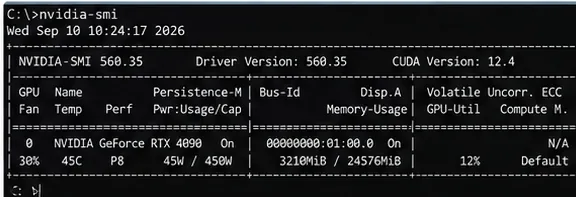
透過減少採樣工作、控制解析度和批次大小、簡化節點、使用快取以及安全地調整 VRAM 和注意力來加快 ComfyUI SDXL 渲染速度。
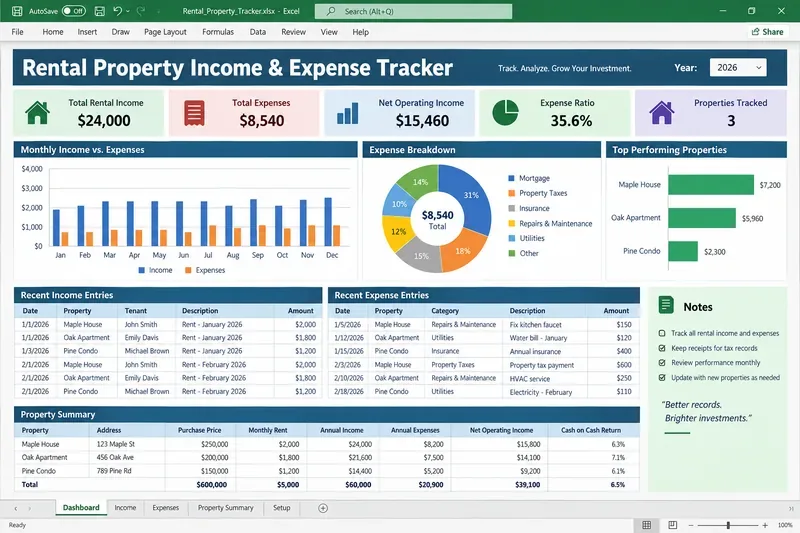
Build a practical rental property income and expense tracker in Excel with clear categories, formulas, monthly summaries, and tax-ready recordkeeping guidance.
使用 Ollama、AnythingLLM、本地嵌入和 RAG 建立私人本地 AI 知識庫。學習四步驟設定、隱私檢查、測試和備份。
透過修剪輸入、分割文件、使用檢索以及驗證最終答案是否涵蓋來源文件來修復長文檔分析中的上下文視窗錯誤。