How to Fix a Word Document That Opens as Read-Only on Mac

Fix Word documents that open read-only on Mac by checking Office updates, file permissions, cloud access, document restrictions, and shared-file locks.
2026 update: Runway Gen-3 is now a legacy workflow, not a current generation option. Runway states that Gen-3 Alpha was retired on July 8, 2026, and Gen-3 Alpha Turbo was retired on July 30, 2026. Its current replacements include Gen-4.5 for Text to Video and Image to Video, Animate Frames for keyframe work, and Edit Studio Aleph 2.0 for Video to Video. See Runway’s Gen-3 retirement notice.
That change affects how you should approach the topic today. If you are finishing an old project built from Gen-3 clips, the consistency problem is still the same: a character can drift in facial structure, hair, wardrobe, body proportions, age, or styling when each shot is generated independently. But for new work, the most defensible workflow is to preserve the character in still-image references first, then animate those controlled frames with Runway’s current video tools.
Action: Do not spend time looking for a hidden Gen-3 toggle in the current interface. Treat Gen-3 advice as legacy production knowledge and map it onto the current References plus Image-to-Video workflow.
A common misunderstanding is that a carefully repeated text prompt should be enough to keep the same person across many shots. Runway’s own long-form filmmaking guidance says otherwise: working from a single character image can still produce subtle identity variations when the model must infer unseen angles. Runway recommends creating character plates—neutral images of the same character at different angles, outfits, and framings—to reinforce identity before placing the character into scenes. See Runway’s longer-video and filmmaking workflow.
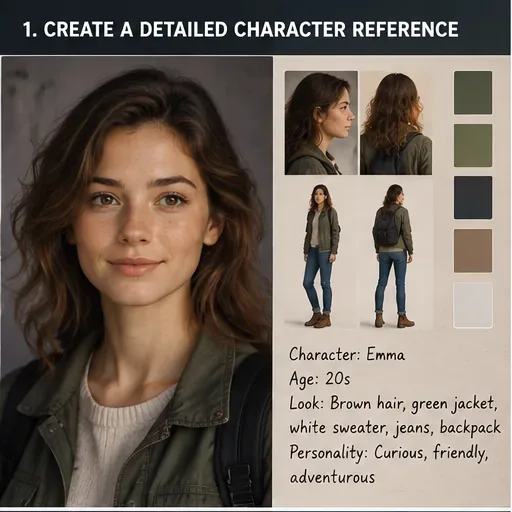
Action: Build the character as a visual asset first. Keep at least a clean front or three-quarter portrait, a profile view, and a wider body view if your planned shots require them.
Choose one image as the canonical identity reference—the image that best represents the face, hair, skin tone, age, and defining wardrobe. Then create supporting plates for angles the story actually needs. Runway recommends neutral, simple environments and lighting for character plates because this gives the model fewer irrelevant details to preserve or remove later.
For current Runway image generation, Gen-4 Image References is explicitly designed to create consistent characters across different scenes, lighting conditions, and treatments. Runway recommends a high-quality subject image with even, natural lighting and a neutral expression, and allows up to three active References in one generation. See Creating with Gen-4 Image References.
What depends on the shot: Three references are not automatically better than one. A close-up may need only the canonical face reference; a full-body side view may benefit from a profile or body plate. Extra references can introduce competing information when they are not relevant.
Action: Match the reference set to the camera angle you are generating instead of loading every available image into every shot.
The most reliable way to reduce drift is to separate two jobs that creators often ask the video model to solve at once: deciding what the character looks like and deciding how the character moves. Generate or prepare the starting image for each shot first. Check the face, hairline, eye color, outfit, accessories, proportions, and overall styling while the frame is still static.
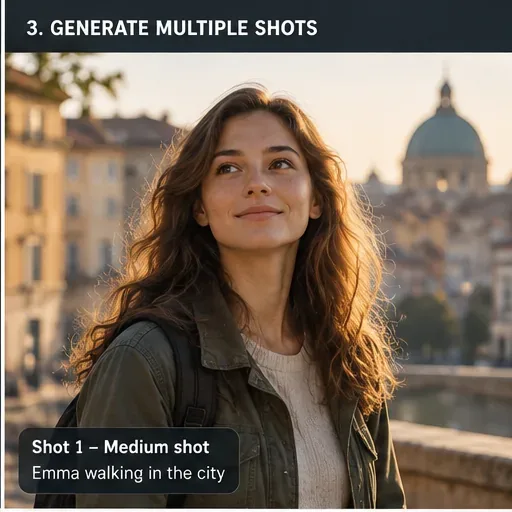
This matters because Runway’s current Image-to-Video guidance says the input image already defines composition, subject matter, lighting, and style. The text prompt should primarily describe what happens over time: subject action, environmental movement, camera movement, timing, direction, and speed. See Runway’s Image to Video Prompting Guide.
Action: If a still frame already contains the right character, do not rewrite a long physical description of that person in the video prompt. Let the image carry identity and use the text mainly for motion.
Another misconception is that repeating every facial and wardrobe detail in every video prompt increases consistency. With image-to-video, Runway recommends focusing almost exclusively on motion and warns that re-describing visual information already present in the image can reduce motion quality or produce unexpected results. Current Runway guidance also favors direct, positive, unambiguous wording and iterative refinement rather than overloaded instructions.
For example, if the approved starting frame already shows your character, a prompt such as “The woman turns toward the window and smiles. The camera slowly pushes in. Natural handheld movement.” gives the model a specific temporal job. A long prompt that redefines her face, hairstyle, jacket, jewelry, lighting, lens, city, emotion, and action all at once creates more opportunities for interpretation.
Action: Maintain a small reusable motion-prompt template: camera movement, character action, environmental motion, and timing. Change only what the shot actually requires.
Character drift is not equally visible in every shot. A slight facial change may be invisible in a wide establishing shot but obvious in a close-up cut immediately after a medium shot. Consistency review therefore needs to follow the edit, not just isolated outputs.
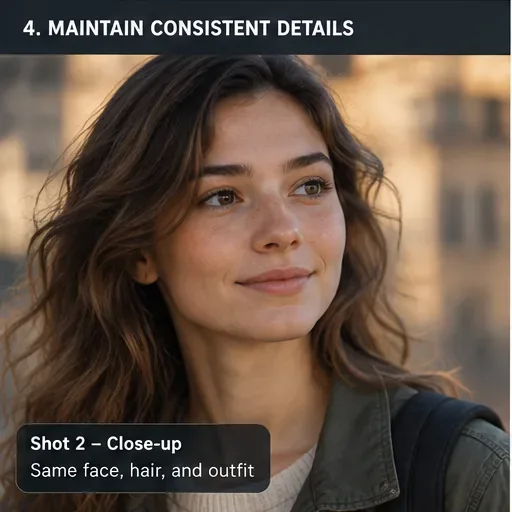
Runway’s filmmaking guidance recommends checking scenes side by side for a cohesive mood and visual style. That same habit is essential for identity. Compare the new shot to the previous shot and to the canonical reference, especially around the eyes, nose, jawline, hair silhouette, clothing seams, distinctive accessories, and age cues.
Action: Review neighboring shots at the same time. If the face is drifting, fix the source frame rather than trying to hide the mismatch with a more elaborate motion prompt.
A front-facing portrait does not contain complete information about a person’s profile, back of the head, jacket shape, backpack, or body proportions. When a model has to invent those missing views repeatedly, identity can change. This is exactly why Runway recommends angle-aware character plates for longer projects.

Action: Before generating a profile, back view, full-body shot, or unusual camera angle, add or create a plate that already shows the character from a comparable perspective.
If you already have Gen-3 footage, you do not need to discard it simply because the model is retired. The useful question is whether the accepted shots share a stable identity. Pick the best existing frame as your visual anchor, then rebuild problem shots using current reference-image tools and Image to Video. This preserves the creative work that still fits while replacing the clips that break continuity.
For a shot that directly continues the previous one, Runway’s current Image-to-Video guide documents a continuation technique: extract the last frame of a completed generation and use that frame as the image input for the next generation. This can preserve immediate composition and pose across a cut. However, it is not a guaranteed identity lock; repeated chaining can carry forward any artifact already present in the source frame.
Action: Use last-frame continuation for adjacent movement when it helps, but regularly return to your clean canonical reference rather than chaining indefinitely.
Verified: Runway explicitly recommends character plates because a single reference can still produce subtle variations when new angles are required. Text consistency alone does not supply missing visual information.
Action: Add visual references for the angles that matter.
Verified: Runway’s current prompting guidance says detailed prompts can reduce ambiguity in some situations, but excessive complexity can also make troubleshooting harder. For Image to Video specifically, the input image should carry the visual identity while text focuses on motion. See Runway’s Introduction to Prompting.
Action: Put appearance control in the reference image and motion control in the video prompt.
Verified: Gen-3 Alpha and Gen-3 Alpha Turbo are retired. Runway does not present them as current generation choices in its 2026 help documentation. The current Gen-4.5 workflow is accessed through Apps or the Tool Mode model selector with Video selected. See Creating with Gen-4.5.
Unknown: No public Runway document can promise perfect identity preservation across every shot, angle, action, and lighting condition. Generative results still require review and iteration.
Action: Plan for controlled iteration instead of looking for a one-click identity lock.
| Before generation | During generation | Before editing |
|---|---|---|
| Choose one canonical face reference | Use the most relevant angle plate | Compare neighboring shots side by side |
| Create profile and body plates when needed | Approve the still frame before animation | Check eyes, jawline, hair, age, and wardrobe |
| Keep wardrobe and palette documented | Prompt mainly for motion in Image to Video | Replace drifting shots rather than accepting them |
| Plan camera angles in a shot list | Change one major variable at a time | Use color grading for style matching, not identity repair |
The durable lesson from Gen-3 is not a particular prompt formula. It is a production discipline: establish identity visually, plan the angles you need, generate controlled still frames, animate those frames with motion-focused prompts, and review shots in sequence. Runway’s current tools make that separation clearer by pairing image References with dedicated Image-to-Video models.
If you are rebuilding a Gen-3 project in 2026, start by extracting the strongest surviving character look from your old material. Turn that into a canonical reference and a small set of plates. Use References to create the new shot frames, then animate them with Gen-4.5 while keeping prompts simple and physical. The result is not mathematically guaranteed to be identical in every frame, but it gives you a repeatable workflow for reducing drift and knowing exactly where to intervene when it appears.
Fix Word documents that open read-only on Mac by checking Office updates, file permissions, cloud access, document restrictions, and shared-file locks.
Runway Gen-3 is retired, but its character-consistency problem remains. Use references, character plates, disciplined shot design, and image-to-video workflows to reduce drift.
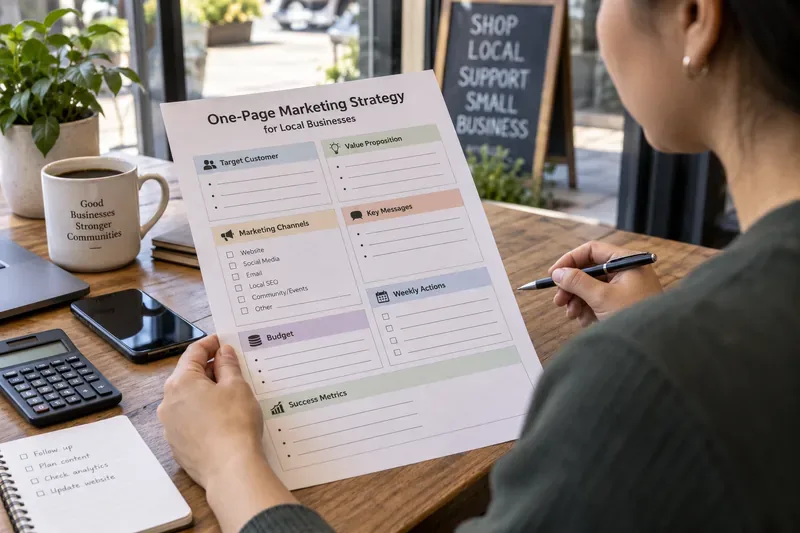
Use this printable one-page marketing strategy template to choose local customers, channels, offers, budget, actions, and measurable goals without overplanning.
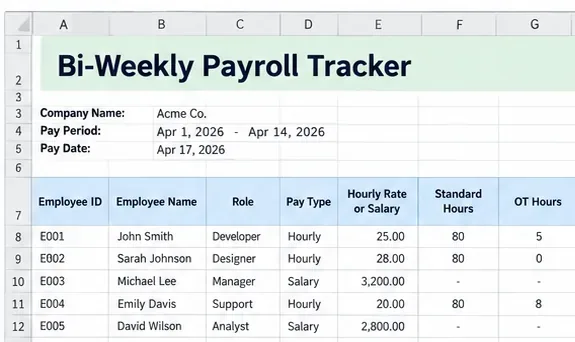
Build a practical bi-weekly payroll tracker in Excel with clean fields, formulas, controls, and 2026 payroll compliance references for small teams.
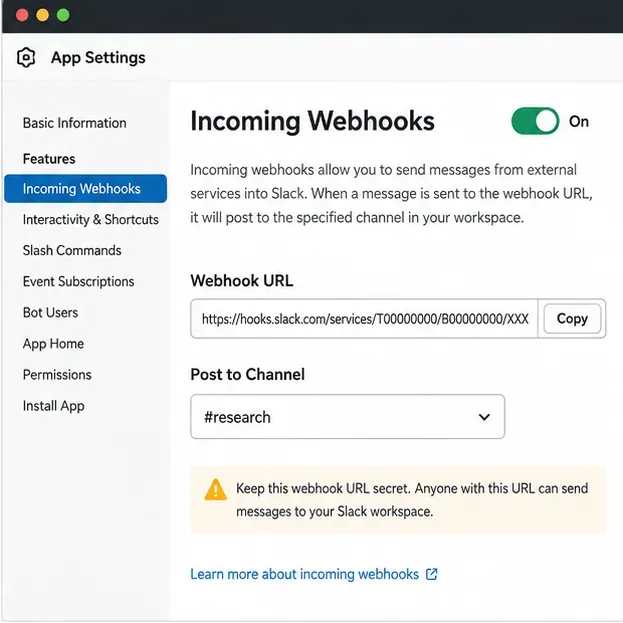
Build a practical Python research assistant that finds arXiv papers, creates faithful structured summaries, deduplicates results, and posts concise digests to Slack.
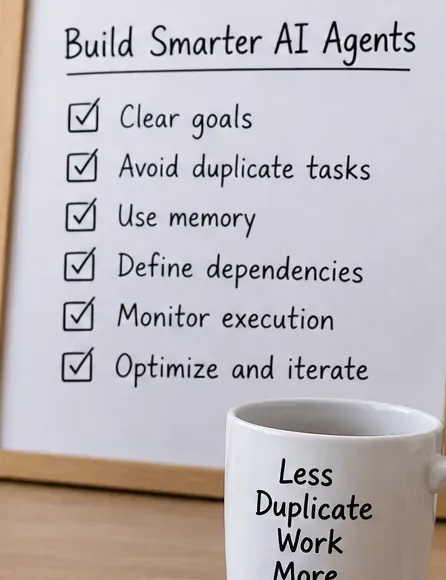
Stop CrewAI agents from repeating work by fixing task ownership, dependencies, delegation, retries, Flow triggers, state persistence, caching, and idempotency.
Build an independent contractor expense tracker for U.S. freelance work, with IRS-aware categories, receipt records, 2026 mileage rates, and tax-review flags.
Build a free employee shift schedule in Excel with an hours calculator, overnight-shift formulas, weekly totals, quality checks, and clear limits.
Build a practical Excel lead tracker with tables, dropdowns, follow-up alerts, and a simple pipeline summary—plus clear signs that it is time to move to a CRM.
Build a practical Excel equipment maintenance log for workshop assets with service history, due dates, downtime, costs, inspection records, and clear safety boundaries.